




Astec India to Showcase What’s Next for Aggregate Producers at
Bauma CONEXPO INDIA 2026
Proven Technology. Built in India. Built to Perform.
Built on decades of proven performance and engineered for what’s next, Astec Industries, will showcase a connected portfolio of aggregate and materials-processing equipment at Bauma CONEXPO INDIA 2026, combining proven engineering with smarter technologies to deliver higher performance, greater efficiency and improved operational control.
By bringing globally engineered solutions closer to Indian producers, Astec helps operations select equipment based on material characteristics, capacity targets and end-product requirements. From rock breaking and feeding to crushing, screening and material handling, the portfolio is designed to improve throughput, maximize uptime and consistently produce specification-compliant products across diverse Indian operations.
Featured Aggregate Equipment
Astec Kodiak® Cone Crusher
The Kodiak® cone crusher delivers dependable performance in demanding secondary and tertiary aggregate applications. Its precision roller-bearing design supports accurate settings, consistent reduction, and reliable product control.
Crusher selection should go beyond tonnes per hour and target product size.
Feed characteristics, operating conditions, crushing mechanism, and fines generation all influence product quality, saleable yield, and ultimately the overall economics of the operation.
In one documented K200+ hard-aggregate application, replacing an existing cone crusher increased production capacity by 30% and raised the share of a high-demand product fraction from 50% to 70%, without additional man-hours. The result demonstrates the value of matching the crusher not only to feed rate, but also to the product mix demanded by the market.
Astec Vari Vibe® High-Frequency Screen
India’s growing demand for manufac-tured sand is increasing the need for consistent quality and efficient recovery of valuable fine material. As producers seek to reduce dependence on river sand and water-intensive processing, the Vari Vibe® High-Frequency Screen offers a dry-screening option for suitable applications.
Vari Vibe® applies high-frequency energy directly to the screen media at speeds of up to 4,200 rpm. This helps keep the material bed active, minimize blinding, and improve recovery of valuable 0–2 mm fines.
For suitable applications, the screen can help producers achieve grading required for IS 383 applications, including Zone II concrete sand and Zone IV plaster sand, while reducing dependence on conven-tional washing systems. Lower water use may also reduce slurry generation and fines-handling complexity.
Lower structural vibration, reduced wear, and faster media replacement support higher availability, easier maintenance, and lower operating costs.”
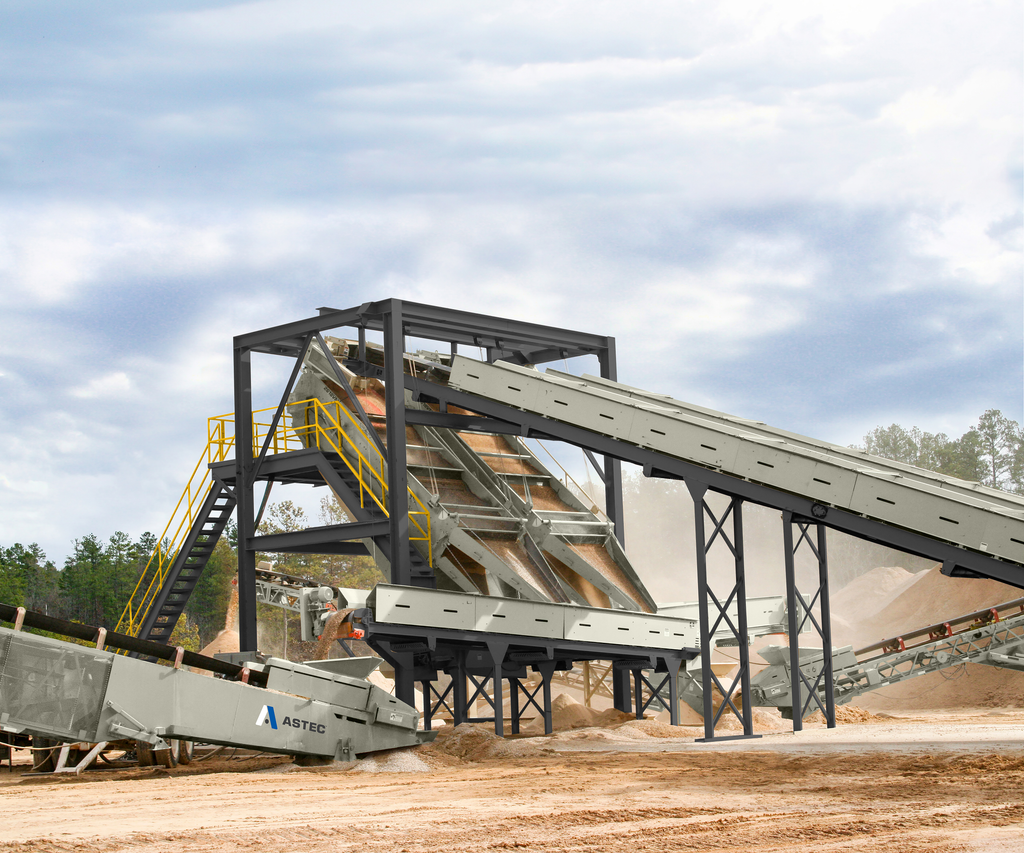
The Kodiak® cone crusher and Vari Vibe® screen will anchor Astec’s broader portfolio for India’s aggregate sector. Visitors can also explore jaw and multi-roll crushing solutions, incline screens, vibrating grizzly and pan feeders, BX Series hydraulic breakers, and conveyors for material transfer and stockpiling.
Together, these technologies connect the major stages of the processing circuit, from controlled feeding and rock breaking through crushing and screening to efficient material movement.
Visit Astec at Hall 12, Booth N31, where equipment specialists and application experts will discuss feed material, target gradations, capacity requirements and site constraints.
Astec Industries, Inc
Web : www.astecindustries.com
