




Space Multiplier: Redefining Urban Parking through Smart Engineering

Wohr Parking Systems Pvt. Ltd.
As Indian cities continue to expand vertically and vehicle ownership rises steadily, the demand for intelligent, efficient, and future-ready parking infrastructure has become more critical than ever. In this interaction, Mr. Mayur Bhosale, National Sales Head at Wohr Parking Systems Pvt. Ltd., discusses how advanced mechanised parking technologies, automation, and integrated mobility solutions are transforming urban infrastructure and enhancing user convenience across residential, commercial, and mixed-use developments.
At Wohr we firmly believe that our innovative parking systems can make an important contribution to sustainability, especially in the construction sector. The development of sustainable parking solutions has been driven by an urgent need for more efficient use of urban spaces and a lower ecological footprint.
Could you tell us about WOHR’s journey in India and how your solutions have evolved to meet modern parking requirements?
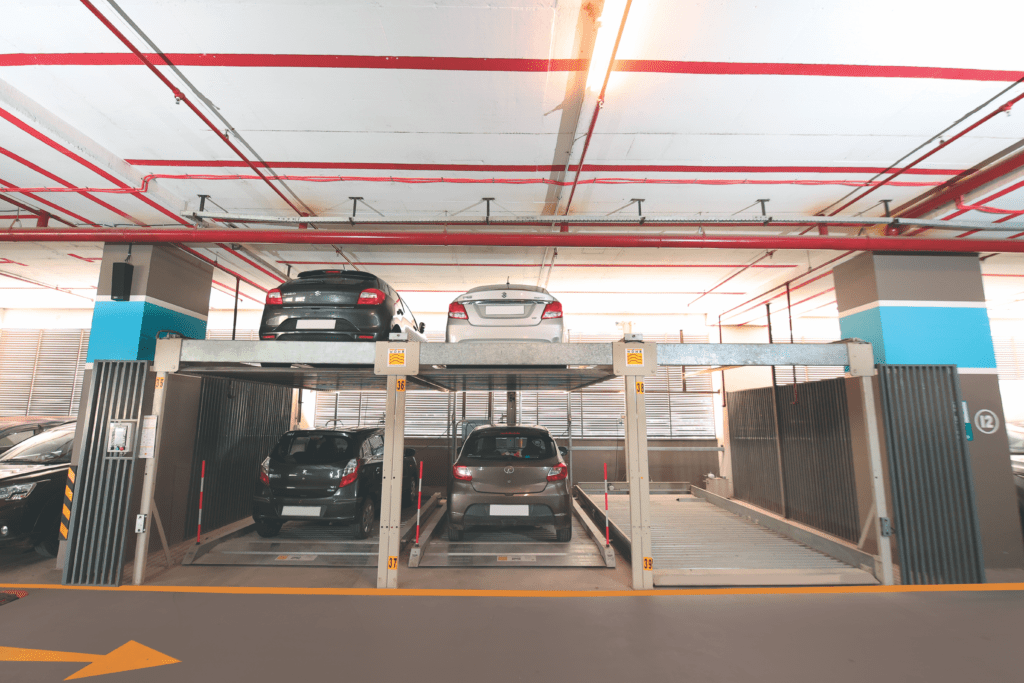
WOHR Parking Systems, backed by over 120 years of German engineering expertise, has established itself as a leading force in the mechanised parking industry worldwide. Since entering the Indian market, we have consistently focused on delivering practical, safe, and space-efficient parking solutions tailored to the needs of Indian urban infrastructure.
Over the years, we have successfully installed more than 1,85,000 parking spaces across the country. Our approach begins at the project planning stage itself, enabling developers, architects, and consultants to optimise parking capacity while maintaining operational efficiency and user convenience.
When mechanized parking systems were first introduced in India nearly two decades ago, the market was relatively unfamiliar with the concept. Conven-tional parking methods dominated the landscape, and acceptance of automated systems took time. However, with increasing urban density, limited land availability, and growing awareness about efficient space utilization, the perception has changed significantly.
WOHR has continuously upgraded its technologies to align with evolving customer expectations. Our systems are designed in compliance with European standards and stringent safety regula-tions, ensuring long-term reliability and performance.
The industry has also moved from manually operated systems toward smart, digitally connected parking infrastructure. At WOHR, technology remains central to our innovation strategy.
What challenges have you encountered while implementing intelligent access and parking solutions in India, and how have you addressed them?
India’s urban infrastructure ecosystem is evolving rapidly, and today’s develop-ments demand integrated mobility solutions rather than standalone parking systems. Building Management Systems (BMS) are increasingly becoming the backbone of smart buildings, connecting everything from entry gates and elevators to access control and parking management.
Modern users expect a smooth and uninterrupted journey from the moment they enter a facility until they reach their destination within the building.
One of the primary challenges has been ensuring seamless integration between parking systems and broader building management frameworks. At WOHR, we have focused on designing adaptable solutions capable of integrating with various access technologies and operational platforms. This allows property developers and facility managers to maintain continuity, enhance convenience, and improve overall traffic management within the premises.
What advanced technologies are being integrated into modern parking systems, and how do they improve operational efficiency?
The parking industry is witnessing a rapid transition toward digitalization and automation. WOHR has integrated several smart technologies into its systems to enhance operational efficiency, user comfort, and safety.
Touchless technologies, RFID-based vehicle identification, app-enabled operations, remote monitoring, and intelligent automation are now becoming standard requirements across projects. In addition, upgraded PLC software enables smooth coordination between parking equipment and user interfaces.
Features such as automatic access control, digital parking allocation, and real-time monitoring significantly reduce human intervention while improving system accuracy and operational reliability.
How do your parking solutions enhance convenience in residential complexes, commercial developments, industrial hubs, and high-traffic environments?
At WOHR, we conduct detailed traffic and movement studies before recommending a parking solution. Our systems are engineered to maximise parking capacity while ensuring safe and effortless vehicle handling.
For residential developments, convenience and ease of operation are key priorities. In commercial and mixed-use projects, the focus shifts toward efficient traffic circulation, higher vehicle turnover, and minimising waiting periods. By optimising parking layouts and integrating intelligent movement planning, our systems help create smoother traffic flow within the premises.
In what ways do intelligent parking systems contribute toward reducing congestion and vehicle emissions?
One of the major advantages of organised parking infrastructure is the reduction in unnecessary vehicle movement. Conventional parking areas often force drivers to circulate repeatedly while searching for available spaces, which increases congestion, fuel consumption, and carbon emissions.
WOHR’s smart parking systems integrated with BMS technologies allocate dedicated parking spaces and streamline vehicle movement within the premises. This minimises idle circulation and improves entry and exit efficiency.
Moreover, parking planning at the design stage allows for better traffic organisa-tion, ensuring that vehicle flow patterns are clearly defined in advance. This contributes not only to operational efficiency but also to a more sustainable and environmentally responsible urban ecosystem.
How do parking requirements differ between residential and commercial developments?
Residential and commercial projects have distinct operational priorities when it comes to parking infrastructure.
In residential developments, users generally seek simplicity, low maintenance requirements, dependable operation, and cost efficiency over the long term. Since operating expenses are directly linked to residents and housing societies, there is a strong preference for reliable systems with minimal maintenance complexity.
Commercial and public infrastructure projects, however, prioritise efficiency, faster vehicle movement, higher parking turnover, and seamless traffic management. Building operators aim to maximise space utilisation while delivering a convenient experience for visitors and occupants.
Despite these differences, there is a common expectation across all segments for smart, dependable, and future-ready parking solutions that combine operational efficiency with enhanced user comfort.
What are the most in-demand parking features today among developers, and commercial property owners?
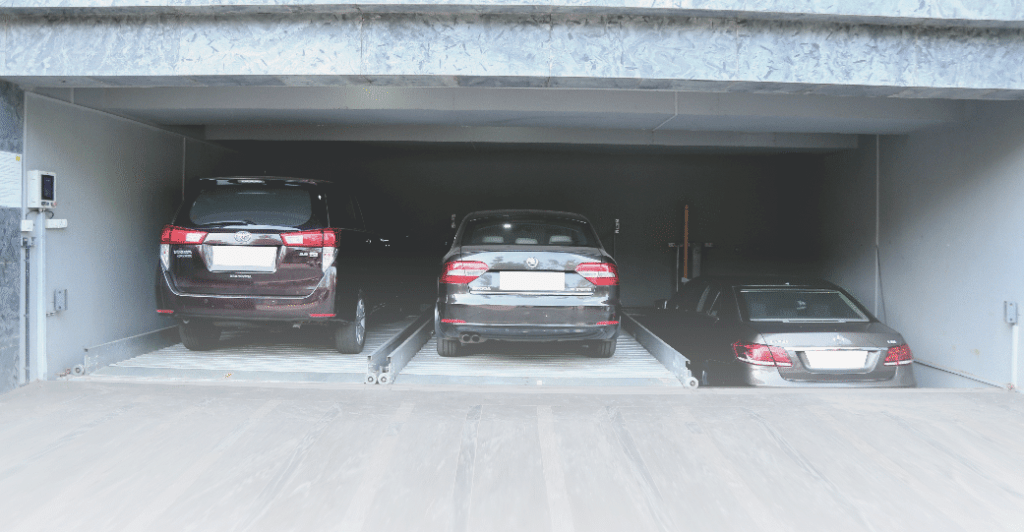
The Indian passenger vehicle landscape has changed considerably in recent years. There has been a strong shift from compact sedans toward larger SUVs and premium vehicles. This transition directly impacts parking design requirements, as larger vehicles require wider platforms, greater load-bearing capacities, and improved manoeuvring space.
At the same time, the growing adoption of electric vehicles is reshaping parking infrastructure planning. EVs require integrated charging provisions and future-ready electrical infrastructure, making it essential for parking systems to support sustainable mobility requirements.
Wohr addresses this need directly through integrated EV charging posts available as part of our parking systems. These provisions allow developers to future-proof their infrastructure, ensuring that as EV adoption accelerates, the charging ecosystem is already embedded within the parking structure.
Additionally, evolving regulations such as the Real Estate (Regulation and Deve-lopment) Act (RERA) have increased transparency and accountability within the sector.
Could you share some notable project deployments where WOHR’s solutions have delivered significant impact?
WOHR has successfully executed several landmark parking projects across India, particularly in high-density urban developments, airports, and premium commercial complexes.
Among the most notable projects is at the One BKC, Mumbai, where WOHR introduced one of India’s largest and most advanced robotic parking systems. Although the original requirement was for approximately 250 vehicles, our engineering and design optimization enabled the creation of nearly 1,148 parking spaces within the same footprint—demonstrating the true potential of space multiplication.
Aurobindo Realty’s Galaxy Tower, a 25-storey corporate landmark in Hitech City, Hyderabad, required a smart parking solution to serve its scale. Wohr delivered the Combilift 551, an independent puzzle parking system that optimized 1,800 car spaces efficiently within the building’s footprint. Despite the unprecedented challenges posed by the COVID-19 pandemic, Wohr completed the project successfully and handed over to the client.
Wohr optimized the car parking space at Adani’s corporate office building in Gurugram with Independent puzzle parking system (Combilift 543) 62 spaces.
Wohr expanded the commercial parking space at AP4 tech park near close proximity of Pune Airport. Independent puzzle parking of 1867 car spaces (Combilift 551) helped to optimise the parking space and traffic flow.
Wohr Parking Systems Pvt. Ltd
Toll Free No. : 1800-267-8848
Email : info@wohrparking.in
Web : www.wohrparking.in/
